
FRENZY GUIDE
Choosing a bike chain gets confusing when you only look at "11-speed" or "12-speed". Modern groupsets have become more specific: Shimano, SRAM and KMC do not always use the same chain shape, quick link or shifting technology.
That is why this guide does not start with isolated terms such as HG+, Flattop or T-Type. Instead, it follows the way you should actually make the decision: identify your drivetrain first, check the number of speeds, choose the correct chain family and only then decide how to prepare it for hot wax.
Reading time: 10 min | For gravel, MTB & road bikes

Do not choose your bike chain by brand name alone. Work from drivetrain to cassette, then to chain type and only then to hot-wax preparation. If you want to start with hot-wax right away, you need to choose the right compatibility and decide how much preparation you want to do yourself.
Step 1
Step 2
Step 3
01
02
03
04
05
06
Do not start with the chain itself. Start with the groupset on your bike. You will usually find that name on the derailleur, shifters or crank: Shimano 105, Ultegra, GRX, Deore, SLX, XT, SRAM Rival, Force, Red, GX Eagle, X01 Eagle, and so on.
Why does that matter? Because a chain does not only have to fit between the sprockets. It also has to work well with the cassette, derailleur pulleys, chainring and quick link. Especially on modern 12-speed systems, those parts are more closely matched.
You do not choose a chain separately from the cassette. Spacing and shift profiles help determine which chain makes sense.
Advice: first note the brand and groupset. Only then choose the chain.
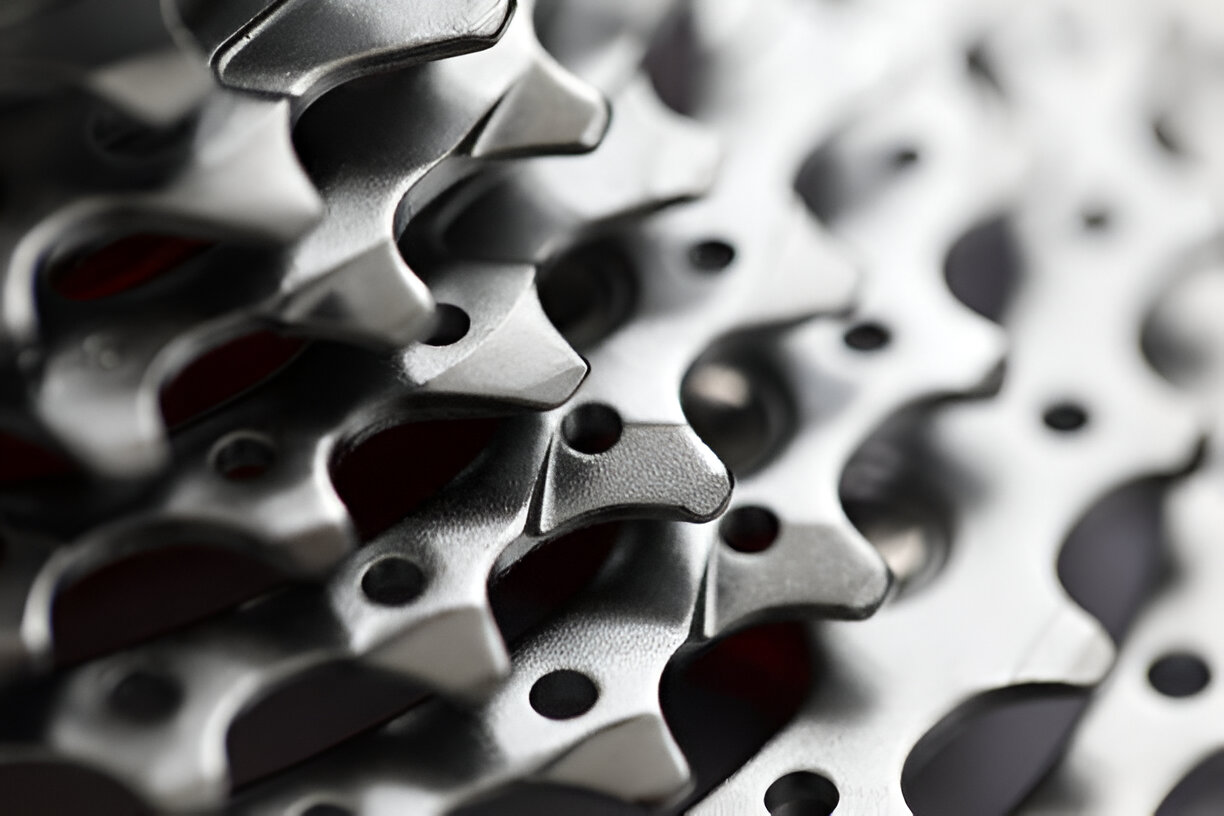
Only now should you look at the number of speeds. Count the sprockets on the rear cassette. That determines the basic chain width.
An 11-speed chain is wider than a 12-speed chain. A 12-speed chain has to fit between sprockets that sit closer together. That is why "almost the same" quickly becomes a problem: more noise, worse shifting or faster wear.
However, speed alone is not enough. A SRAM Road Flattop 12-speed chain is not the same as a SRAM Eagle 12-speed chain. A Shimano HG+ 12-speed chain is not simply a universal 12-speed chain either.
Advice: use speed as a filter, not as the final decision.
With Shimano, the choice is usually fairly logical if you stay within Shimano.
Shimano 11-speed road, gravel and MTB: think of 105, Ultegra, Dura-Ace, 11-speed GRX and 11-speed SLX/XT. You would normally choose a Shimano 11-speed HG-X11 chain or a clearly compatible alternative. Pay attention to directional installation: some Shimano chains have an inner and outer side that must be installed correctly.
Shimano 12-speed MTB: think Deore, SLX, XT and XTR 12-speed. Here you are in Shimano HG+. These chains have a specific plate shape for better chain retention and smooth shifting under load.
Shimano 12-speed road/gravel: modern 105, Ultegra, Dura-Ace and certain 12-speed GRX setups require a chain that follows Shimano’s 12-speed design. Always check official compatibility before moving away from the standard chain.
FRENZY advice: if you ride Shimano and mainly want certainty, choose a chain from the same Shimano family or a Ready2Wax variant that is explicitly intended for that groupset.
With SRAM it becomes confusing more quickly, because "12-speed SRAM" can mean several different systems.
SRAM Eagle 12-speed: this is the classic MTB 1x12 world: GX Eagle, X01 Eagle, XX1 Eagle. It needs an Eagle-compatible 12-speed chain.
SRAM Road AXS / gravel AXS: Rival, Force and Red AXS use Flattop chains. They have a different shape from classic Eagle chains. So do not simply swap them.
SRAM Eagle Transmission / T-Type: this is the newest Transmission family. T-Type chains are designed specifically for that system and use their own PowerLock. So do not treat T-Type as "just another 12-speed chain".
FRENZY advice: with SRAM, identify the SRAM system first and only then select the number of speeds. It is especially important not to confuse Flattop and T-Type.
KMC is interesting when you deliberately want an alternative to Shimano or SRAM, or when you want a chain that is broadly compatible within a certain speed. That can be useful on older or less critical systems.
With very specific modern systems, nuance remains important. A chain that is "12-speed compatible" is not automatically the best choice for SRAM Flattop, SRAM T-Type or Shimano HG+ if you want maximum shifting quality.
FRENZY advice: KMC can be an excellent choice, but do not use it as a shortcut when you are not actually sure which system you have.

A new chain contains factory grease, including inside between pins and rollers. For hot-wax, that has to be removed completely.
If oil or factory grease remains, wax adheres less well and your wax bath gets contaminated faster.
You choose the right chain for your system and start from a clean base right away.

No. Speed is the basis, but not the full choice. Especially with modern 12-speed systems, you also need to look at Shimano HG+, SRAM Flattop, SRAM T-Type or the recommended chain family.
Look at your rear derailleur, shifters, crank or cassette. You will usually see Shimano 105, Ultegra, GRX, Deore, SLX, XT, SRAM Rival, Force, Red, GX Eagle or another groupset name there.
Mainly technically safer at the start. The chain is prepared for hot-wax, reducing the risk of leftover factory grease and a contaminated wax bath.
Sometimes yes, but treat it as a deliberate compatibility choice. With specific systems such as SRAM Flattop, SRAM T-Type and Shimano HG+, it is best to stay close to what the manufacturer specifies.
READY2WAX
GETTING STARTED
SETUP CHOICE
Discover when to choose MELTLAB Pro, TrailWax or DIP ’n RIP for your maintenance routine.